Life After Leonard: Can the Raptors Compete in the New East?

Raptors news: No intro press conference planned for Kawhi Leonard


Note: This article was originally published on August 15th, 2019.

Kawhi Leonard will forever be enshrined as a legend of the Toronto Raptors. It’s an odd fact, given that he only donned the red and black for a year. He wasn’t the most electric star the team ever had (that honour belongs to Vinsanity), but he was certainly the best. Kawhi is simply put the most complete 2-way player the team ever had. He is one of the most complete 2-way players the LEAGUE has or has ever had. In a recent poll of 20 NBA coaches and execs, Leonard was voted the best player in the league today, receiving twice the amount of first-place bids as the next vote-getter, Milwaukee’s Giannis Antetokounmpo. Is the league just suffering from recency bias? Is Kawhi just benefitting from the Halo effect? Probably. But at the same time, I don’t think that ought to undermine his position as the best player in the league. I’m sure he has the vote of Philly fans.

Even if you don’t agree that Kawhi is cemented as the league’s preeminent player, asking how to replace one of the league’s finest scorers offers only crickets in response, underscoring the ridiculousness of the question. It reminds me of the scene in Moneyball in which Brad Pitt’s character, Billy Beane, rhetorically asks his staff how the Oakland Athletic baseball club could possibly replace star slugger Jason Giambi. There simply is no other Giambi. There is no other Kawhi. There’s no other 2-time defensive player of the year with a lethal shooting ability who happens to be as strong as a bear. The fact that the Raptors landed Kawhi in the first place is a minor miracle in itself. How often can you trade for a legitimate superstar on a reasonable contract and give up a mid-level star in return? A deal like that is the El Niño of the NBA, only coming along once every handful of years. The rest of the time, teams are forced to grind it out and build through the draft and in free agency, where big stars are rare and when available they command big contracts. Truly good deals are exceedingly rare.

However, the rocket ship that was Kawhi Leonard was not the only bit of good luck the Raptors had in the 2018-2019 NBA season that propelled them to a championship. Last season, a star was born and his name is Pascal Siakam. Siakam and his continued ascendance is the reason Raptors fans have reason to feel hopeful despite the Kawhi-shaped hole in the city’s heart. The 3rd year pro took a major leap from solid rotation guy to key cog on a championship team. Siakam is the king of hustle. The man simply refuses to be outworked by anyone on the court – chasing down opposing players in transition before turning up the floor, ready to receive a heave from his backcourt. But he is more than just a workhorse; the stats back him up as a legitimate threat to opposing defenses. In just 2 years, Siakam leaped from the 22nd to the 83rd percentile in points per shot attempt, scoring 126.3 points per 100 shots, per Cleaning the Glass. His efficiency has climbed as he has developed refined, and now patented his spin-move. It is a move of such devastating efficacy despite, or perhaps because of its simplicity. WIth a 7’3” wingspan and the ability to finish with either hand, Siakam can exploit any mismatch against guards or smaller forwards cursed with the task of defending him around the rim.

There are other bright spots on the team too. The 2019 postseason saw the birth of Playoff God, Fred Van Vleet. Van Vleet, an undrafted combo guard out of Wichita State shot over 40% from behind the arc throughout the playoffs, besting Steph Curry, Damian Lillard, and Paul George from downtown. What’s more is Steady Freddy seems to have a proclivity for shining brightest when the spotlight is on him, hitting clutch buckets when the Raps need him most. An asset like Van Vleet who can come off the bench (or potentially even start with the absence of Danny Green) can’t be undervalued when we prognosticate about the Raptors chances to compete in the 2019-2020 NBA season.

However, there are other causes of concern aside from Kawhi’s California departure. Kyle Lowry is entering the season at 33 years of age. Marc Gasol is 34 and Serge Ibaka is 29. There is the risk that the Raptors simply won’t be able to keep pace with more youthful, athletic teams. Moreover, where the Raptors certainly got worse this offseason with the loss of Kawhi, other teams in the East got better. Milwaukee kept its core of Giannis and Khris Middleton intact. Philly inked Tobias Harris and Ben Simmons to long-term deals, and may actually have a more cogent offensive identity with the loss of Jimmy Butler. Same goes for Boston – swapping out the bizarre Kyrie Irving for team-first minded Kemba Walker may allow one of the most gifted young cores in basketball to finally congeal and make room for superstar-in-waiting Jayson Tatum. Indiana gets back a healthy Victor Oladipo to pair with prized new acquisition Malcolm Brogdon. Even lottery teams like Chicago have an exceptionally talented group of youngsters that may be ready to make the leap into playoff contention. The Knicks…well nevermind. Everywhere you look, the top contenders and middling teams in the East are poised to compete. This is one of the many beautiful things about sports. The ever shifting landscape of team power is a huge part of what makes the NBA so exciting to watch. But that same drama we love as fans is what keeps players, coaches, and execs up at night. There is no certainty or guaranteed success in the NBA.

It would be genuinely surprising if the Raptors weren’t a playoff team this year. While they lost the most gifted player in the association, they still possess a lot of talent and young players who have yet to reach their peaks. Nobody is picking them as a finals contender, but that doesn’t mean they can’t still put on a show that the city of Toronto has come to know and love. What’s more is that now that the Raptors have won the championship, the public perception of them has shifted from an over-performing Canadian team to a legitimate basketball market desirable as a free-agent destination. What players suffer in the form of high-taxes (someone has to pay for our free healthcare) and freezing weather they are rewarded in top-notch management and an absolutely rabid fanbase. The city can hope that this newfound identity will allow the team to retain its recent run of good fortune. If not, Raptors president Masai Ujiri may just have to wait for another El Niño deal to come across his desk.

Book Notes: Blockchain Revolution by Don Tapscott and Alex Tapscott

Blockchain Revolution: How the Technology Behind Bitcoin Is Changing Money,  Business, and the World: Tapscott, Don, Tapscott, Alex: 9780143196884:  Books - Amazon.ca

Overall Score: 4.5/5

Key Takeaway: Blockchain has the potential to be a revolutionary technology as important as the Internet. We would all be wise to educate ourselves on blockchain and its potential applications, and be vigilant as to how it may disrupt industry.

Notes:

  • The bitcoin network is the most powerful network in the world
  • cryptography = the art of writing or solving codes
  • Nodes = a basic unit of a data structure
  • Miners = cryptographers who save difficult problems on the blockchain
  • Miners who are working on the bitcoin blockchain problems solve them on average once every 10 minutes
  • It’s a Poisson distribution – so sometimes it takes an hour, sometimes it’s a minute – but it AVERAGES ten minutes
    1. Poisson distribution = events are independent and don’t affect each other
    2. One block being created fast is independent of how long it will take to create the next block
  • Each block on the blockchain MUST refer to the immediately preceding block
  • Whereas technology tends to automate away the edges – the workers doing menial work, blockchain automates away the CENTRE – the middlemen
    1. Such as companies like airbnb, Uber, etc.
    2. Because people no longer need to rely on an intermediary to establish trust between parties
  • Cool concept about having a canonical identity stored on the blockchain, but you only show certain parts of it to certain people – your “identity blackbox”
  • Blockchain has MANY potential applications:
    • For example: could help in ensuring where foreign aid money is being spent – reduces possibility of corruption
    • Provenance of food
  • Blockchain has the potential to be really helpful for people sending remittances back home
  • They wouldn’t have to pay the high transaction fees associated with western union
    1. Their family members back home then receive more money; and then be able to qualify for a bank account or other markers associated with improved economic standing
  • Wall Street is taking blockchain seriously
  • Blythe Masters – the former head of JPMorgan Chase’s derivatives group has joined a blockchain startup
    1. Many people believe it will be AS IMPORTANT AND TRANSFORMATIONAL as the Internet has been
  • The proof of work model of bitcoin is what’s called a CONSENSUS MECHANISM
  • A way of the peer network reaching consensus about who gets the right to create the next block
    1. Some call this a more democratic way of achieving consensus than proof of stake models – where it is based on how much equity you already have in the system
  • One huge application – obviating the need of corporations to store customers’ data
  • Data storage is a actually a liability because it necessitates increased security architecture against breaches
    1. Many companies have had data records hacked to the tune of tens of millions of customers’ records
    2. The blockchain enables greater security against these kinds of breaches
  • Blockchain uses a PKI – public key infrastructure
  • Where part of the key is public and the other part is private – privately held by an individual
  • Blockchain removes the DOUBLE-SPEND PROBLEM
  • Having to ensure that the same dollar isn’t spent twice
    1. All transactions are recorded on the blockchain – and once a unit currency is spent – it’s transparently noted and impossible for the same user to even attempt to spend that same currency again
  • One of the most exciting uses of blockchain is for SMART CONTRACTS
  • The beauty of smart contracts, as I understand it, is that they ensure that parties fulfill their obligations without having to resort to the legal system if parties fail to do so
    1. For example – if a publisher fails to give bitcoin one month to a musician for the right to distribute their song, then they seize to have control of the digital form of that music encoded on the blockchain
    2. Artists no longer have to sue the publisher to get their rights back
    3. As long as parties’ obligations can be encoded into the blockchain in some fashion, then there can be automatically applied remedies for obligation non-fulfillment
    4. So parties who don’t know or trust each other are FORCED to live up to their obligations, and if they don’t, then there is no need to litigate the matter – the blockchain automatically resolves this issue when these terms are built right into the smart contract
  • Blockchain could radically transform accounting
  • We’ll no longer have to rely on companies to report honestly
    1. Removes the possibility of scandals, of dishonest reporting as occurred with Enron
      1. Fraud would require an ongoing act of dishonesty – companies couldn’t go back later to try to change the numbers – because old blocks recording original transactions/numbers can’t be deleted
  • Blockchain leverages the wisdom of the crowds
  • The idea that crowds can collectively create much better predictions than individual experts can, generally speaking
    1. Love this paraphrase of blockchain: The world can agree on something
  • Blockchain is antithetical to hierarchies; it is about distributing power and control more democratically, or perhaps even more meritocratically
  • Retail banking is due for a HUGE disruption
  • One startup, Circle is offering a FREE app whereby you can digitally store any form of currency you want and transfer it for anything else
  • Where many are discomforted by total transparency, there is the possibility of PERMISSIONED blockchains
    • Where only certain people who are credentialed can access and edit it
      1. But presumably others can still see it, there’s still transparency,
  • Blockchain can also change the architecture of companies
    • Where partners come to consensus about which projects to work on, members are incentivized with cryptocurrency – the amount of which is collectively agreed upon, people decide which projects to work on
    • this is the model being used by the blockchain company Ethereal
  • A new understanding of smart contracts
  • I thought that they removed the need for a 3rd party intermediary – but they don’t really it seems
    1. Still need an arbitrator to confirm that the party who offered consideration in exchange for payment has delivered
      1. Ex. A software developer has indeed written the code
    2. However smart contracts DO still solve the problem people welching on their agreements
    3. In old versions of blockchain, a person would send payment (bitcoin) to someone’s public key address, and that person would in turn use their PRIVATE key to access the funds and deposit them in their personal account that only they could access
      1. They could in theory then renege on their end of the bargain, or vice versa
    4. NOW – smart contracts ensure that there are 3 parties that have a “key” to unlocking the funds – the 3rd party being the arbitrator/disinterested 3rd party
    5. The funds are in their control in the interim – but they an’t access them for themselves
    6. The funds are sent to a new type of address called a Pay to script hash (P2SH)
    7. Multiple people must “sign off” on transactions being completed to release funds – “multisig”
      1. Parties agree on how many signatures a transaction will generate – N signatures
      2. And they agree how many will be required to COMPLETE the transaction – M signatures
        1. So completion requires M of N signatures
    8. If a party is unsatisfied with the work done for them, they can refuse payment (refuse to offer their signature on the deal) and the parties then look to the arbitrator
  • What blockchain really seems to enable is collaboration and co-operative ownership models
  • Where people can co-create value and equally share in the profits
  • Also seems to enable people renting out their excess storage capacities, assets, renewable energy etc.
  • So people can get paid for what they’re not using by renting it out to others
    1. Rather than relying on big companies, utility providers, etc.
  • Smartwallet is one company leveraging blockchain
  • Storj allows people to rent out storage space on their computer
  • One big advantage to blockchain is that it opens up new markets for transacting
  • For example – you can deal with someone in Nigeria and trust that they’ll pay because you have assurance of it through blockchain mechanisms
    1. Whereas before, it would be a legal nightmare to sue them for non-payment because you’re in different jurisdictions
      1. Blockchain opens up interjurisdicitional opportunities and enables remedies outside the confines of a legal system that may not be able to provide any
  • For example on how blockchain is revolutionizing finance – look at the company Abra
  • Abra utilizes a 2-of-3 multisig bitcoin address
    1. The 3 sigs are Abra, the user, and a third-party oracle who sets the exchange rate between bitcoin and whichever asset the user wishes to hold.
    2. Which makes this a smart contract
    3. The keys to the money are literally stored on the user’s phone
  • Building a supercomputer powerful enough to corrupt the bitcoin ledger is knows as a 51% attack
  • But paradoxically, that would make network centralized, and likely less valuable in the eyes of the market, and cause the price of bitcoin to plummet
    1. It would cost about $3 billion in hardware to achieve this
    2. Would the US government or another foreign actor ever be incentivized to do something like this?
  • Because of this, Bitcoin is censorship-resistant
  • Meaning that not only are transactions near-impossible to block/censor, but bitcoin is near-impossible or highly impractical to STEAL
    1. Which protects against poor governance that degrades fiat currencies via inflation in countries like Venezuela and Argentina
      1. This is why people invest in gold and offshore banking – because they are both censorship-resistant
  • Blockchain is big for the INTERNET-of-THINGS
  • Gives rise to what the Tapscotts call the ledger of everything – where every device that is connected to the internet – called NODES – are recorded on the ledger
  • Western Union and other remittance-based companies are bound to be disrupted
  • This is a big feature of apps like Abra – where you can beam money across the world
    1. Rather than paying foreign exchange fees, fees to send cash, etc
    2. Which are typically around 7.5%
    3. Plus these payments take a long time
    4. A filipino nanny in Toronto will send money back home that could take 3-4 days to actually reach her family member
    5. With an app like Abra, it can take just hours or minutes
  • Estonia is leading the way when it comes to countries leveraging blockchain to create new efficiencies in their government
  • Citizens get an electronic ID that contains ALL they information
    1. They can contain this ID on smartphone or in a physical card
    2. So they don’t need separate transportation cards, bank cards, etc. – it’s ALL stored in one convenient place
  • Remittances are the biggest outflow of money from western economies, foreign aid is the second largest
  • Foreign aid is often squandered – see the Red Cross in Haiti following 2010 earthquake
    1. But this is often due to systemic problems in aid-receiving countries
    2. But blockchain can help save those problems
      1. Creating transparent land-title registration systems so that aid organizations can actually figure out who owns land and go about building upon it
  • Could really change democracy
  • Including how juries are selected
    1. Could bring back the idea of ATHENIAN DEMOCRACY
    2. i.e where EVERYONE is involved in justice
      1. Could have a crowd online asking questions of the witness for example
    3. People could vote online for their government representatives
  • What is meant by hash rate?
    • The rate at high the miner solves blockchain/bitcoin code
      1. The hash rate on the bitcoin blockchain network is sufficiently high – presumably because there’s lots of miners with sufficient computing power on that blockchain network
      2. Whereas, presumably, other blockchains haven’t reached that critical mass of miners yet
  • Blockchain could bring about HUGE changes in the way artists are compensated for their work
  • Currently, they make less than a penny per stream on the music streaming services
    1. Artists are often the last to be paid in traditional distribution models – where an artist signs to a record label
    2. There’s nothing wrong with these companies making money per se, it’s just that in today’s streaming world it’s become much more difficult for artists to make a decent living, so they need to look elsewhere for sustainable models
    3. Enter the blockchain
      1. Artists can sell music, or even streams directly to consumers and receive micropayments in bitcoin in return
    4. The blockchain also ensures that ownership and copyright is registered for all to see; no debate over who created what
    5. Imogen Heap is leading this charge – exploring ways of putting smart contracts into blockchain for her music
    6. Talks about how it gives her control
      1. She can give away her music for free on certain days, or to people of a certain demographic once their identity is verified on the blockchain
  • Some cool companies working in the art space
    • PeerTracks for music
      1. Where people can buy coins akin to baseball cards for their favourite artists, trade and sell them
        1. And hence benefit when an artist goes from obscurity to spotlight; their coins become more valuable
      2. Artlery for art
        1. Where people can invest in a portion of a work of art, and then benefit from its appreciation when it eventually sells to a final buyer
          1. really good explanation of how blockchain works on pages 240-242 with artlery as an example
      3. An interesting fact: the vast majority of nodes in the network aren’t working on solving the math problem that carries the right to create the next block
      4. Most nodes are simply verifying transactions
      5. ALSO – one BLOCK can contain many many transactions – millions it seems
        1. The transactions that occurred in that interval of time since the last block was created – I believe
      6. Each new block must reference the unique hash of the previous block plus a new NONCE
        1. The number that can be verified as the solution to the math problem
      7. Getting the nonce right is akin to buying a lottery ticket
      8. You benefit from having more tickets (computing power) but winning is ultimately based on pure luck, not skill
        1. This is the proof-of-work mechanism
  • The bitcoin blockchain network uses a tremendous amount of electricity, and therefore is a carbon emissions contributor
    1. So this is a challenge of widespread adoption
    2. Maintaining the approx. $3 billion worth of bitcoins takes $100 million in electricity each year
    3. These numbers could have changed since this stat was printed
  • Ethereal is an arbitrary-state, Turing-complete-platform that leverages the power of blockchain technology
  • Turing-complete that the platform can host applications that fulfill a variety of functions
    1. Similar to how your smartphone is Turing-complete in that it can play audiobooks and also look up the weather
      1. It is not constrained by only being able to run a specific type of application
  • Blockchain regulation efforts this far have been ineffective
  • In NYC – bitcoin companies fled because the licenses were so costly when they were introduced
  • Central banks may eventually embrace cryptocurrencies by holding some in reserve, just like they do with fiat currencies and other valuable assets like gold
  • Central banks are the liquidity providers of last resort
    1. Central banks could also require major financial institutions, like RBC, to hold some reserves of cryptocurrencies at the central bank

Can you Feed Your Dog a Plant-Based Diet?

The issue of what to feed your pets is one that comes up for any vegan pet owner. And while I certainly don’t feel I can call myself vegan yet (I figure I need at least a year or so under my belt), it’s certainly something that’s on my mind as I seek to live in a way that is more compassionate towards all animals. At the same time, it’s one thing to declare that we no longer want to consume animal products ourselves, and quite another to impose that belief system on our dogs and cats.

I have been the happy owner of a French Bulldog named Huxley for the past 2.5 years. Given my recent exploration of the plant-based diet, I wanted to see whether or not I could also feed him a plant-based diet without adverse effects to his health.

For the first 2.5 years of his life, my dog has been on a mixture of kibble (made using meat) and raw food (all raw meat). The raw food movement has exploded in popularity in recent years. And to be fair, I noticed benefits when I switched him over from kibble to raw food. He was a very chubby puppy, and he quickly slimmed down on the raw food diet. In retrospect however, it appears that may have purely been because I was simply feeding him too much – and Frenchies will eat everything you put in front of them!

At first, I was skeptical about the merits of feeding a dog a vegan diet. Could a dog really thrive on a plant-based diet? After all, they’ve descended from wolves. Aren’t they obligate carnivores that need meat to survive?

I really wanted to figure this out and share it with the world, since I know first-hand the ethical dilemma posed by feeding our pets. If the cost of owning a dog is that other animals must suffer, then is it ethical to own a dog in the first place? The following article will share what I’ve learned about the science of canine nutrition. I hope it is helpful for you and simplifies your task of deciding what to feed your beloved pet.

Dogs are Omnivores

Before we dive into plant-based nutrition for dogs, it will be helpful to contrast their situation with that of cats. Let’s start with some definitions. As most of us know, herbivores eat only plants, carnivores eat only meat, and omnivores eat both meat and plants. The term obligate carnivore applies to species who are required to eat meat to survive. House cats, for example, are obligate carnivores. Cats require 11 amino acids. Amino acids are the building blocks of protein. The most notable of these amino acids as they pertain to dog and cat health is called taurine. Yes taurine – as in the stuff that’s added to Red Bull energy drinks. Cats are not physically capable of synthesizing taurine from other amino acids (called “precursor” amino acids). And taurine is only found in animal foods, such as chicken, seafood, etc.

When pet-owners have ignored this basic biological fact, the results have been predictably disastrous. Cats fed an improper diet can and do die. Without taurine, cats can develop a condition known as DCM (dilated cardiomyopathy), which is when the walls of a cat’s heart thin and weaken, thereby failing to deliver oxygen throughout the body properly. (Note: There are vegan and fortified cat foods on the market, so this may be an option for some cat owners, but it’s outside the scope of this article)

Dogs can develop DCM as well, though it appears not be as prevalent in them. The causes of DCM are only partially understood. Genetics appear to play a large role. But what appears very clear is that taurine deficiency also is a significant contributor to a dog from a vulnerable breed developing DCM.

Dogs need taurine too, but unlike cats, they possess the remarkable ability to synthesize their taurine from two other precursor amino acids: cysteine and methionine. And unlike taurine, those cysteine and methionine can be found in plant foods. Thus, taurine is considered a non-essential amino acid for dogs.

To get into the weeds even more, dogs have the ability to make taurine from cysteine which is in turn made from methionine. So this amino acid precursor chain works sequentially.

How Much Taurine Do Dogs Need?

This is tricky. Short answer: It depends. Large dogs synthesize their own taurine at slower rates than that of small dogs. Certain breeds also appear to be particularly susceptible, such as golden retrievers, boxers, spaniels, and Newfoundlands. So for someone like me with an approximately 22 lb. dog, the concern is lower than for others.

This is why it’s so critical to buy dog food that is fortified with taurine. Even though dogs can make their own if they have adequate amino acid precursor levels, it’s a risk. The safest route is to just give them taurine in a readily bioavailable source, such as fortified food or a supplement.

The particular food I’ve recently started buying for my dog is called v-planet. My dog absolutely loves it! This is no paid endorsement; I just genuinely love the product. They add in a ton of essential nutrients and vitamins to the food. It contains B12, vitamin D, and taurine – the big 3 things that are naturally lacking in a plant-based diet. I encourage you to check them out here: https://v-planet.com/. It’s also surprisingly affordable. I’ve seen plant-based kibble go for crazy-high prices. As in $100 for a 16 lb. bag. V-Planet was about $70 CAD for the same 16 lb. bag. It’s an American company but the food is made in Canada (where I live), which I also like.

It’s also good to know that the taurine that comes added to products today – whether it’s dog food or energy drinks – is in synthetic form. It isn’t derived from animals, which is useful to know seeing as taurine used to be derived from bull semen. Yuck.

What Does the Science Say About Artificially Added Taurine?

One of the fascinating things I learned while doing research for this article is that most meat-based food actually is supplemented with synthetic taurine, which is vegan. So even meat-based kibble companies acknowledge that their product doesn’t ave enough naturally-occurring taurine either!

The story gets even more interesting. A 2015 study at Ross University of Veterinary Medicine took a group of 34 dogs currently being fed conventional kibble (and almost certainly meat-based), and put them on a plant-based diet (V-Planet kibble). The dogs showed a remarkable 54% increase in their taurine levels after just 30 days! Remember, these are dogs that were eating commercial kibble prior to the diet, kibble that ostensibly would have already contained supplemental taurine. And after 90 days on the diet, zero dogs showed any signs of DCM. Admittedly, this was a pretty small sample size, and further research needs to be done. But this is a promising sign that dogs can not only thrive on a plant-based diet, but do better on it than they do on a conventional diet.

Should We Really be Feeding Dogs Fortified Foods? Isn’t that Unnatural?

This is a really common argument that you hear all the time when it comes to diet. The uber-popular Paleo diet is premised on the idea that we should eat how our ancestors ate for millenia as that diet will be optimized to our evolved biology (although the notion of whether or not we ate large quantities of meat in our evolutionary history continues to be hotly contested). This argument, of course, extends to pets. We should be feeding our pets the diets they evolved to eat, so the thinking goes. And so if dogs are direct descendants from wolves, and wolves eat primarily meat, then that’s what we should be feeding our modern day dogs too. And this was the argument I believed in and espoused to those willing to listen for years as I fed my pup a raw-food diet. I even would grow visibly agitated and annoyed when my vet would question this philosophy.

However, I’ve had a change of heart when it comes to this line of thinking. For starters, I no longer consider past behaviour to necessarily be an indication of what is optimal for us or our pets today.

Let’s start with people. Human beings have done a lot of stuff throughout our history that most of us would consider abhorrent by today’s standards. In the light of modernity, we recognize that raping and pillaging a neighbouring village is immoral. We recognize that killing other humans is wrong and we’ve attached a criminal sanction to such behaviour. We’ve denied women and minorities the right to vote. We’ve prosecuted unjust wars. Our history is a litany of mistakes as our sense of morality has evolved, which is what we call progress. So the all-important question becomes: If we can feed ourselves and our dogs a healthy diet by leveraging the power of technology and innovation without needing to kill other animals, shouldn’t we?

We use technology to make every aspect of our lives better. Why would we not also use technology to fortify something like dog food with essential nutrients to make the lives of millions of farm animals better? If we can put the essential vitamins and minerals that a dog needs and that they’d normally get from meat into their food, why wouldn’t we?

People get a bit squeamish when it comes to eating food that is made in a lab. They call it frankenfood. They say it’ll give you cancer. They say that it can’t be good for you because it isn’t natural. And while it’s true that much of our processed food today is unhealthy, that doesn’t logically equate to the statement that all processed and/or fortified foods are necessarily unhealthy. When we can take healthy, whole, plant-based food and add to it essential nutrients like vitamin D and B12, I welcome such an innovation for me and for my dog.

The Bottom Line

Before starting your dog on a new diet, it’s best to consult with your veterinarian. However, you should be aware that they might not necessarily know about the science of feeding a dog a plant-based diet. They may not be aware of the various brands on the market, the fact they contain all the essential amino acids and other valuable nutrients, etc. I encourage you to challenge your vet on why they are making the recommendations they are, whether any of their other dog patients are on a plant-based diet, and whether they think plant-based kibble plus supplementation would be a viable alternative to feeding your dog a meat-based diet.

We all love our dogs. They’re one of life’s greatest gifts. We all want to feed them the best, highest-quality food possible. And we have to be very careful about imposing our ideology onto other species. While humans can thrive on a plant-based diet, that may not be the case for other animals. But we also don’t want to have the cost of treating our dogs well to be cruelty to other animals. How can we plausibly claim to love animals if we are knowingly contributing to their abuse, horrific treatment, and inhumane slaughter? In order to be consistent in our professed love of animals, we have to make every effort to reduce the suffering of all living beings on this planet – not just the ones we call pets.

I hope this article has encouraged you to seek out plant-based sources of food for your pup and talk to your vet about the viability of this shift. I promise I’ll keep you guys updated on any changes I notice in my dog’s health – for better or worse – as well as whether I have decided to take him off the plant-based diet, add in supplements, etc. As always, thanks for reading, I hope it’s been valuable for you!

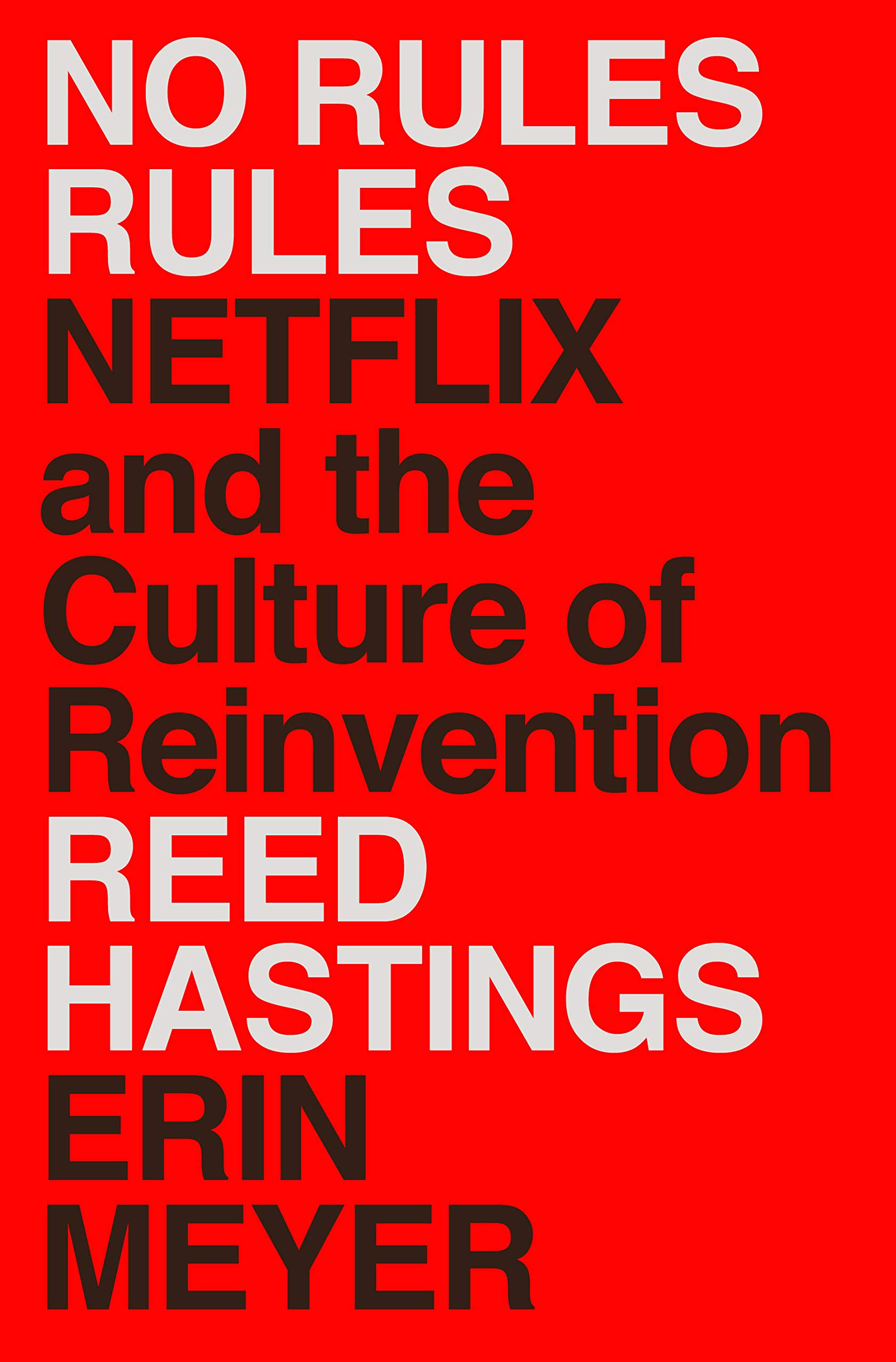
Book Review & Notes: No Rules Rules by Reed Hastings and Erin Meyer

Rating: 9/10

No Rules Rules: Netflix and the Culture of Reinvention: Hastings, Reed,  Meyer, Erin: 9781984877864: Books - Amazon.ca

Notes

  • The book is structured into 3 parts/tips for building a great organization:
    1. Increase talent density 
    2. Increase candor 
    3. Remove rules/policies/procedures
  • Netflix believes in paying its ‘rock-star employees’ a little bit above top of market – this is known as the “rock-star principle” in Silicon Valley 
    • And if someone ISN’T a rock-star employee – they don’t hire them 
    • They must be a ’stunning’ employee in Hastings’ words 
    • it’s better to have one employee that’s amazing, then have 5 mediocre ones
      • Save the salary that would go to the other 4 and just hire one person who’s incredible
  • What’s more – is that having mediocre performers on your team can drag the whole team down 
    • It sends the message that mediocrity is acceptable 
    • It may even be demotivating to top performers
  • Netflix discovered this when they had to cut 30% of their workforce and productivity actually went UP!
  • Netflix doesn’t have an expense-approval process
    • It just tells its employees to “act in Netflix’s best interests”
      • Every so often, receipts are audited so that people that abuse the system are caught 
    • Hastings estimates that this may cause the company about 10% more than if they had rigid controls
      • But it’s worth it! A strict policy would alienate creative types; the types that enable Netflix to thrive – the top performers in their field
  • Netflix also has no vacation policy – people take as much as they want and when they want
    • Save for certain exceptions, like accounting not being able to take vacation in early January during their busy season 
  • BUT – Hastings notes, it’s critical that c-suite executives model this ethos by taking LOTS of vacation themselves and talking about ti loudly 
    • Otherwise a no vacation policy becomes a ’no vacation’ policy 
    • So Hastings takes at least 6 weeks of vacation each year – and many others do too
    • It’s a system built on trust – they TRUST people to do the right thing 
  • On Candor 
    • It’s DISLOYAL to NOT say something when you disagree with someone
    • Your loyalty, if you’re part of Netflix, is to Netflix as a company 
      • Your goal can NOT be to please your boss
      • If you don’t think something will work, you better say so
    • Whisper wins and shout losses 
      • If you’ve screwed up, let the company know 
    • If thinking about corporate reorganizations, let the company know – i.e just be straight with people and trust that they’re intelligent adults that can handle and deserve the truth 
  • Give people raises before you have to
    • Ensure you continue to pay them top of market 
    • This means 30% raises some years and zero the next, rather than the standard 2-3% cost of living raises that most companies offer irrespective of performance 
  • On that note, do AWAY with performance bonuses 
    • Rather than $200k with a 15% bonus, just offer $230k
    • Studies show that people are far LESS CREATIVE if they feel that their compensation depends on hitting certain targets
    • You want to give them enough money to feel secure, but not tie their compensation to performance in a way that will create stress and stifle creativity 
  • If it wins, celebrate it. If it fails, sunshine it.
    • Sunshining is the process of loudly talking about your failures with the whole team, but more importantly, telling everyone what you LEARNED and how you can do things differently in the future
      • It’s critical here for the bosses not to make a big deal over the failure, but really just to highlight the learnings
  • Netflix employs what’s called the “keeper” test, which invites managers to ask of their employees:
    • “If this person came to me and stated they were leaving, how hard would I fight to keep them?” 
      • If they’d fight hard, then that person is a stunning employee
      • If not, then they should either be immediately given steps to improve or let go with generous severance
  • Most places have performance improvement plans (PIPs) in place to help struggling employees
    • But Netflix would rather get rid of the underperforming employee right away, and use that money the they would have paid them over the next few months to just give them a generous severance 
      • This saves them the intangible cost of having an underperforming team member for several months when they could be instead focused on replacing them with a stunning employee 
  • Netflix doesn’t think of themselves as a FAMILY, but as a CHAMPIONSHIP SPORTS TEAM
    • In a family, you don’t let go of underperforming players
    • But in a pro sports team, you routinely swap players in and out, doing whatever you think you can do to give your team the best chance to succeed
      • This makes sense to me as a better model for organizations
  • I like his point about staring at what you want, rather than staring at your fears 
    • Experts have shown that by focusing on what you fear, you’re more likely to create that very situation
  • Rather than building a top-down hierarchical model, Netflix is more like a bottom-up organization, where the leadership is like the roots of a tree and the subsequent team members are the branches
    • Reed Hastings, as CEO, sets the direction of the company with a broad vision- the root
    • A VP takes that vision and then has the freedom to decide how best to implement it in their given area – the first branch 
    • An informed team captain then has the power to decide which individual movies and shows to order based on guidance from their VP – the final branch
  • At Netflix, this whole concept is called leading with context, not control
    • They don’t tell their team members what content to buy, how much to spend, etc. – they set the direction, and then trust that their people will make the right decisions 
  • A great example of this is how Icarus, the Oscar winning documentary, was purchased
    • They bought it at the Sundance film festival 
    • The leader of documentaries wanted it, but it would mean outbidding every other company and pay an unprecedented amount for a doc, so he went to Ted Sarandos, the COO
    • Ted didn’t say yes or no, he simply asked – “is it the ONE?” – meaning, is it the documentary that is going to be a hit or an Oscar-winner 
      • And said that if it was the one, then they should spend whatever they needed to
      • That’s CONTEXT, not control
      • Control would have been stating that the company could only spend amount of dollars on the project and no more
  • At Netflix, you have to do what’s in the best interests of the company. Your job is NOT to please your boss
    • Otherwise, you get into a “the emperor has no clothes” situation 
  • But aren’t their situations where you really lead with control? When a culture of “freedom and responsibility” (a famous Netflixism) just doesn’t cut it?
    • YES! It depends on your industry
    • In some industries and for some tasks, preventing errors is paramount
      • Ensuring a surgeon operates on the correct knee for example – you need a strictly regulated process for that
    • But for creative companies, it’s WAY more important that they focus on innovation 
      • The risk of playing it safe when errors aren’t fatal is that you’ll get left behind and die, out-innovated by more daring companies 
  • Overall, a really excellent, list, breezy read
    • Which isn’t to say it was light on substance
    • It was succinct, nothing wrong with that 
    • One of the best books I’ve read on creating a great organizational culture

90 days of a Plant-Based Diet: Day 9

It’s been a little over a week that I’ve been eating an entirely plant-based diet. As I mentioned in my last post, my intention is to go a 90 full days without consuming any animal products, and then re-assess at that point. That means no meat, fish, eggs, dairy, nor honey. I feel like 90 days is a reasonable length of time to give this lifestyle a try, while allowing my body to adjust to the diet and to see what benefits, if any, I experience.

While it’s been such a short time, I thought today would be a good time to share my initial impressions of eating this way.

Reduced Need for Sleep

This seems to be the most notable shift so far. According to my iPhone sleep tracker app, I’ve slept on average 6 hours and 54 minutes each night for the past 7 days. That’s not totally accurate, as it doesn’t factor in weekends when I don’t set an alarm. However, I notice a marked difference in my energy levels throughout the day. I’m not crashing in the afternoon as often, and I don’t feel the urge to take nearly as many naps. When eating animal products, I would always seem to need to nap unless I got a full 8 hours or more of sleep per night. If this could be a long-term shift, I’d be thrilled, as feeling like I need a nap in the middle of the day is super annoying 😉

Saving Money

Animal products are expensive! What’s remarkable is that they’re as expensive as they are despite the fact that they’re heavily subsidized by government (read: your tax dollars), and that they don’t include negative externalities baked into the price (such as increased greenhouse gas emissions).

I haven’t even been particularly price-conscious with the plant-based foods I buy. I’ve been trying lots of new recipes, buying fresh veggies, herbs, spices, etc. and the cost is still a fair bit less. This is a really great benefit of plant-based eating.

Of course, some plant-based food is very expensive, partly because it doesn’t receive the same subsidies that the meat industry does. At my local plant-based ‘butcher’ shop in Toronto, YamChops, two frozen impossible burgers costs $12. That’s quite a bit, and far more than you’d pay for beef alternatives. Still, you could also go to the grocery store and get a haul of rice, beans, lentils, and quinoa for under $20. So while a plant-baed diet certainly can be expensive, it doesn’t need to be.

Increased Interest in Environmental and Social Issues

This is one I’ve experienced before when I’ve experimented with vegetarian and vegan diets. It’s hard to describe precisely, but I’ll give it a try. It seems as though once you make a commitment to living more consciously, you become interested in all the other ways you can make a difference. It feels like pulling at the threads of a large tapestry. Once you decide you care enough to learn about animal agriculture and all of its problems, you automatically start to care about other issues facing society today. You start asking questions like: How can I reduce my plastic consumption? How can I positively influence others to shift their lifestyles in positive directions? How can I lower my carbon footprint? And so on.

And so these past few weeks, I’ve been doing tons of reading and watching of documentaries, doing everything I can to learn about many of the environmental and social issues humanity faces today. This may seem like a small thing, but for me it’s proving to be an enormous benefit.

There have been so many times in my life when all I wanted to do was to numb myself, eat junk food, and watch re-runs of tv shows I’ve already seen a million times. There I was, telling myself i wanted to read, tackle a new project, invest in a hobby, or go exercise. And yet, so often I couldn’t summon the will to do these kinds of things. It’s literally as if my brain didn’t have the bandwidth to participate in anything but the most mindless of activities. This of course would lead to depression and feeling like I was wasting my life. I certainly am not unique this way. Numbing oneself seems to be the favourite pastime of many people in our society today.

The fact that I don’t currently have the desire to numb myself, that I want to engage in mentally strenuous tasks and keep learning is something for which I am extremely grateful. I don’t think this kind of desire is something that you can switch on and off at will. You can’t force yourself to want to do things you don’t. But I believe that you can make adjustments to your lifestyle so that healthier options become more naturally appealing to you. This mindset, which may be at least partly attributable to the plant-based diet, is my favourite part of the changes I’ve noticed thus far.

Peace

This one is also a bit strange. I genuinely seem to feel greater peace on this diet. I feel less anxious, like whatever might happen to me is okay.

I also feel far less cognitive dissonance. You know what’s hard? Eating factory farmed animals and eggs and dairy when you publicly state that you’re against animal cruelty. If you were to ask anyone on the street if they were against animal cruelty, virtually every single of them would say yes. And yet, most people are still willing to eat factory farmed products, despite the fact that many of us in today’s day and age know about the horrors of animal agriculture. I myself was one of those people. I said that I was against animal cruelty, and yet I actively supported it with my spending power. Not needing to do these kinds of mental gymnastics – eating factory farmed animal products while still imagining my behaviour is ethical – has significantly eased my conscience.

—

I’m really looking forward to seeing what other changes I might experience over the course of the next 81 days. Like I said in a previous post, I really don’t know if I’ll be able to stick to a vegan diet. I’m all too aware of how easy it is to be excited about ideas initially, only to have that enthusiasm wane as time goes on.

I doubt that I’ll stop being convinced that a plant-based diet is the more compassionate, ethical, and sensible choice for most people. I believe that the environmental and animal-welfare cases are overwhelmingly in support of a plant-based diet, and I think it’ll get more and more difficult for me to justify eating another way.

In any event, I’m really optimistic and excited to see where this journey takes me 🙂

Going Vegan

Today marks 6 days without consuming any animal products. As of October 20th, 2020, I finished all the remaining animal products left in my fridge, and it’s been only plant-based food since. I made the decision to lean into veganism several weeks ago, but my fridge was still populated by dozens of eggs and the like, and I didn’t want to just waste the food.

I’ve dabbled with veganism before, and it will be interesting to see if this time is any different. About 10 years ago I was vegan for 2-3 months (I don’t remember exactly), before I got a job at a steakhouse of all places. Looking back, it’s hard to imagine why I would ever take that job. But I was young and excited to work at a trendy restaurant, despite it conflicting with my burgeoning values centred around animal welfare.

As part of our training at this restaurant, we were asked to try all the items on the menu. Not wanting to appear difficult, or crazy for being a vegan who went and got a job at a steakhouse, I dutifully complied.

So my goal this time around is to beat my record and go 3 full months. That would take me to January 20th – the same day as the United States presidential inauguration coincidentally. It’ll be a nice and easy date for me to remember. I like that this takes me through the Christmas holidays too. It’ll be an extra fun challenge to deal with the pressures of not eating the traditionally-consumed animal products around this time, such as the Christmas turkey and litany of chocolates, cookies, cakes etc.

Since that initial vegan experiment 10 years ago, I’ve played around with a LOT of different diets. Keto. Carnivore. Paleo. Low-carb. Free-range.

My most notable shift was seeking to eat animal products produced in less harmful ways. I started shopping at farmer’s markets, buying grass-fed beef and pastured eggs only. I knew about the horrific problems associated with the meat, egg, and dairy industries, and thus tried to circumvent these issues by becoming what I considered to be an ethical consumer of animal products. I varied between being strict about this, refusing to eat factory farmed meat whatsoever, and being lenient, such as buying mostly ‘better’ meat and eggs while still ordering animal-based food at restaurants.

Why am I running this experiment again? I think that deep down, I’m convinced by the vegan argument, and I’ve suspected that they’ve been right all this time. But, at the same time, I think that I’ve lacked the courage and wherewithal to actually commit to this lifestyle.

I’m convinced that it’s unbelievably cruel to factory farm animals. I’m convinced that it’s wrong to mutilate them so that they are more suitable to farm environments. I’m convinced that it’s wrong to artificially inseminate a cow, take away her baby calf, and sell the males to the veal industry. I’m convinced that animal agriculture is one of the most destructive things we do to our environment, and is implicated in a cornucopia of problems, from ocean dead zones, to greenhouse gas emissions, to wide-scale deforestation of the amazon. I’m convinced that even the so-called more ‘ethical’ ways of farming animals still involve a good amount of suffering when the animals are shipped long distances to slaughterhouses, before they are prodded into chutes, strung upside down, and have their throats slit. I’m convinced that doing this, if it is not truly necessary, is immoral.

I don’t want to pretend like I’ll necessarily be able to hold this mindset though. This is because I’ve tried in the past, been convinced by all the same arguments, and yet could not summon sufficient empathy to make a permanent transition to a vegan lifestyle. So all I can commit to right now is taking this day by day, and seeing how it goes.

However, I do know that I want this to be a longer-term transition. I want to maintain a stronger empathy for animals and the planet. I want to make choices every day that align with my values, instead of just giving lip service to compassion while continuing to perpetrate cruelty. I already feel better after just a week of living this way. I feel less cognitive dissonance, recognizing that this is a much more authentic way of living for me.

If anything, I feel a little embarrassed that I haven’t made a more diligent effort at veganism until this point, a few months away from turning 32. But at the same time, I’m choosing to be gentle with myself, and leaning more into this direction now, while looking for ways to make it a sustainable and permanent lifestyle shift.

Woman

You were my greatest love before I knew your name

Or had seen lines of your face

The fullness of your lips

Before I had searched the endless well of our love

Trying to find how much I love you

And never seeing the end

My love for you rests in infinity with the heart of life

Before I had witnessed my legs tremble under the weight of your smile

Or this square in my chest fly like a falcon racing home

To where it belongs

Before I called you baby

Watching fate intertwine to place your soft hands in mine

Like love has been waiting for us for all of existence

Like we place the strings on the harp of life’s soul and the most beautiful music is played

We are that song

And we dance to it like lovers blissfully lost in themselves and all of eternity

And we’ve forgotten our names and our shapes

And dissolved together into the same

All barriers broken

My love unrestrained like wild horses

I sing for you when I walk with the trees

Knowing that you hear me from across the pond

And the ripples and waves carry my heart for you to drink

Oh Woman, all that you are

Do you even know?

Does the summer rose know the perfection of its petals?

Does the sun know it sustains all of life?

Or the swan ever catch a reflection of its wondrous being in the silver lake?

I could write about you for days and not say anything about who you really are

Because you are that vast

And my love for you vaster

Your form like God fashioned himself a lover

And spared no detail

And put off everything until you were done saying “No, it can wait”

No matter how much I have, I always want more of you

The insatiable desire that pervades all things

But this love can’t be bought or bullied with shame or envy or fear

Perfect Love

With no use for anyone else’s opinion

Existing and sufficient unto itself

Brothers

You can take nothing away from me

Nor do you have goods that tempt my desire

The only harm you can do me is when I believe you’ve hurt me

And thus I’ve done it to myself

And while you create tornadoes and fume about

I shall sit here with myself

Unmoved

Still

And treat you as the friend and brother you are

Though you call me your sworn enemy and bring soldiers into my lands

We have no army and I will come for you on a white stallion

With wine and bread in my satchel

And a smile on my face

And watch as you taunt me

Laugh with your battallion at my simple clothes

My small horse

My torn satchel

And I will feel the hurt rise up my chest and into my throat

But I will trap it there

And take a deep breath and so swallow it with the source of all things

And I will smile at you again

I will love you more than before

I will watch as you draw your sword from your belt and up across your velvet robe

And descend from your magnificent beast

While cheered by one of the crowds present

And mine will stay hidden and say nothing

Still smiling

Knowing it could be no other way

And as the grass submits to your mighty stomp I find you next to me

Black leather glove gripping the sword’s handle like Arthur

The assuredness of Alexander beaming from your beautiful face

And I will resist the urge to close my eyes or seek refuge from my imminent parting

But instead look at you square with the subtle power of Marcus

And meet your looming mind with the quiet head of Aristotle

I will watch the sun get caught in the blade and it will sting my sight

And I will laugh the most perfect laughter

I can already hear the Gods calling my name, awaiting my return

Still smiling

I will watch your face turn and your entire being drain from your upright corpse

And you fall to the ground on your knees

And I will meet you there

I will call you beautiful